
Institutional Overview
About the Risk Accounting Standards Board
The Risk Accounting Standards Board develops, researches and codifies the Risk Accounting framework for the measurement of non-financial risk.
RASB brings together methodological development, empirical research and practitioner engagement around the objective of making risk measurement more transparent, testable and reproducible.
Institutional Definition
What RASB Is
The Risk Accounting Standards Board (RASB) is the organisation through which Risk Accounting research, methodological development, and standardisation work is coordinated.
Its purpose is to advance a clear, reproducible, and testable framework for representing non-financial risk, and to support rigorous inquiry into the framework's mathematical properties, operational applications, and analytical limits.
Historical Context
Origins & Foundation
Serraq (HQ) Ltd was established in 2017 and operates under the institutional identity of the Risk Accounting Standards Board.
Academic Research Collaboration
A research collaboration between Serraq and Durham University Business School began in 2017, contributing significantly to the development and formalisation of the theoretical Risk Accounting model.
Institutional Separation
RASB operates independently. It is not part of Durham University, nor is it governed, managed, or owned by Durham University or Durham University Business School.
Core Operations
What RASB Does
The Board focuses its activities across five distinct operational areas to maintain methodological clarity and practical relevance.
Method Development
Develop and refine the Risk Accounting method and its underlying concepts.
Research
Examine the framework’s properties, applications, assumptions, and limits.
Standardisation
Codify terminology, methods, and standards in a clear and reproducible form.
Evidence
Connect methodological claims to published research, empirical testing, and documented evidence.
Engagement
Engage practitioners, researchers, institutions, and other interested organisations.
People
RASB Board
The Board guides the standardisation, governance, and research coordination of the Risk Accounting framework.

Steve Bailey
Chairman

Dr Tom Butler
Board Member
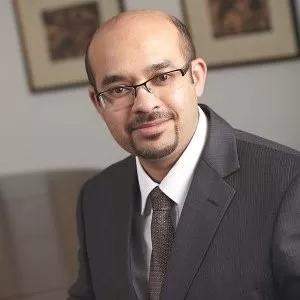
Dennis Philip
Board Member

Paul Costea
COO

In Memoriam
Peter J. Hughes
Founder and Former Chairman
Peter was a chartered accountant whose career included senior finance, audit, and risk roles. He spent many years at Chase Manhattan Bank before undertaking extensive research and development in Risk Accounting. He subsequently served as a Visiting Fellow at Durham University Business School.
His work was central to the creation and development of the Risk Unit and the broader Risk Accounting framework. In 2023, he authored “Risk Accounting: The Complete Guide to Quantifying and Accounting for Non-Financial Risks”. Peter died on 8 February 2024 aged 73.
Charter & Structure
Governance & Constitution
The governance framework establishes the institutional parameters, advisory structures, and operating principles documented for the Board.
Version 1 — 26 February 2023
1. Institutional Background
The Constitution describes the institutional origin of the organisation, clarifying its establishment via Serraq (HQ) Ltd in 2017 and documenting the founding collaborative context from which the initiative emerged.
2. RASB Vision
The document sets out a long-term vision for standardising the quantification of non-financial risks, articulating principles under which methodological research can be structured objectively and transparently.
3. Membership Framework
The framework identifies conceptual arrangements for potential practitioner, academic, and organizational participation, outlining tiered engagement concepts as documented proposals.
4. Board Functions
The framework identifies core oversight responsibilities, distinguishing standardisation governance and research coordination from operational administration.
5. Board Composition
The Constitution sets out expectations regarding requisite professional competency, academic rigour, and balanced practitioner representation across Board members.
6. Governance and Decision-Making
The document sets out advisory voting protocols, documentation standards, and processes for reviewing and updating codified methodological materials.
The Constitution reflects the governance and development framework documented in 2023. Certain provisions in the document were expressly identified as proposals dependent on future funding.
Methodological Lineage
Peter’s Role in the Development of Risk Accounting
Peter Hughes’ work established much of the intellectual and methodological foundation from which the present Risk Accounting research programme continues to develop. The Board maintains a deliberate distinction between the core codified method, published empirical evidence, open research questions, proposed extensions, and historical concepts.
Operational Standards
Institutional Principles
These standards define the current working principles that guide ongoing inquiry and documentation, rather than formal constitutional obligations or regulatory mandates.
Transparency
All calculations, assumptions, and transformations within the framework must remain accessible, fully documented, and mathematically explicit.
Reproducibility
Given identical operational data and risk parameters, calculations should yield deterministic, consistent, and verifiable outputs.
Testability
The framework is structured to invite empirical testing against operational risk events, historical loss profiles, and enterprise controls.
Intellectual Separation
Method development is maintained distinctly from institutional affiliations, academic hosts, and external commercial interests.
Open Scrutiny
Methods and research findings remain open to critique, peer review, academic evaluation, and independent verification.
Resource Index
Explore RASB
Direct navigation to core documentation, foundational papers, and ongoing research repositories.
Academic & Industry Collaboration
Contribute to the development of Risk Accounting
The Board welcomes engagement from researchers, academics, practitioners, financial institutions, professional bodies, and other organisations interested in testing, examining, or reviewing the method.